There is only so much time within the month to not only listen to a small fraction of the music out there but also write reviews for them. Interludes is a monthly column that provides space for bite-sized criticism and commentary on albums that were listened to during this month but did not receive a full review. In this week’s edition, we take a look at the first five albums by English goth-synth pioneers Depeche Mode ahead of their Chicago performance for their Memento Mori Tour.

Speak & Spell – Depeche Mode (1981)
Anyone familiar with the work of Vince Clark, who would later find more harmonious partnerships for his sugary songwriting inclinations with Alison Moyet and Andy Bell in Yazoo and Erasure, would find it readily apparent that Depeche Mode’s debut album is primarily led by his artistic direction. The mawkish songs on Speak & Spell are rote compared to the emotionally conflicted standard the band would gravitate toward in their subsequent releases. Other than “Just Can’t Get Enough,” the only other point of interest is “Big Muff,” an instrumental piece that showcases Clark’s programming skills when he is not busy forcing a square peg into a round hole on the remainder of the album. This first showing is less of a rendering of the group’s attempts to find their footing than it is an easily-skippable vehicle for their juvenile hit single.
★★½

A Broken Frame – Depeche Mode (1982)
The syncopating ringing of synths and four-on-the-floor kick drums of “Leave In Silence” outline the shadow that Vince Clark’s departure from Depeche Mode cast over Martin Gore, who became the band’s primary songwriter at age 21. Some minor chords and softer moods are dabbled with, but the overall formula of A Broken Frame feels only nominally removed from that of Speak & Spell. However, it should be praised for producing the hidden gem “A Photograph of You,” which is perhaps the last instance in which Depeche Mode would sound so intoxicating and joyous while attempting unabashed new-wave pop sheen.
★★★

Construction Time Again – Depeche Mode (1983)
Construction Time Again is where Depeche Mode first establish their lane of English synth pop in earnest by embodying the underlying darkness of synth pop’s hedonistic, obsessive tendencies through the lens of industrial music. The album’s aspirations extend beyond just the sonics, however. With only nine songs on the tracklist (plus a hidden reprise of the mildly hackneyed lead single, “Everything Counts”), its politics are impossible to miss. “Pipeline” sounds straight out of a Dickensian factory with clanging percussion and hypnotic vocals from Dave Gahan boasting of “taking from the greedy” and “giving to the needy.” It has a foreboding atmosphere that is only dissipated from its placement before the unabashedly hooky “Everything Counts,” which attempts to continue the previous song’s train of thought in Martin Gore’s puerilely sung hook: “The grabbing hands grab all they can / Everything counts in large amounts.” The intentional ambience of “Pipeline” also serves to highlight the missed opportunity for more foley-styled instrumentation on the environmentalist “The Landscape Is Changing,” which derives most of its strength from its uncompromising social demand: “I don’t care if you’re going nowhere / Just take good care of the world.” The still-young pioneers proudly display their ambition for achieving something more than a great song about love and heartbreak – that is, greater heights than the group achieved through the singular catchiness of “Just Can’t Get Enough.”
The most compelling moments of Construction Time Again are in its nascent examples of the brooding lyrics and electronic eclecticism that would evolve into Depeche Mode’s core identity as a synth pop group. “Love, In Itself” sets up an expectation of more pining and longing, but this is quickly undermined by the unrelenting “More Than A Party,” which sounds like it takes more influence from the Misfits than Kraftwerk with its apocalyptic themes of a world out of control. While the album is not necessarily nihilistic in its doomsaying and political finger-pointing – “Shame” is unexpectedly effective in its rebuttal of complacency with its chorus: “It all seems so stupid / It makes me want to give up / But why should I give up / When it all seems so stupid?” – an individual and societal Judgement Day is omnipresent throughout. “And Then…” offers an somewhat optimistic speculation that whatever comes after Armageddon “couldn’t turn out worse” than the present state of affairs. The indisputable highlight of Construction Time Again, however, is when the omens fully fall in sync with the dancefloor rhythm on “Two Minute Warning.” The track’s dizzying arpeggios, venomous pre-chorus, and crooning refrain do far more than showcase the first example of Gore and Gahan’s distinctive synergy coalescing into an equally catchy and intriguing track – it also sounds like a springboard of influence spanning Nine Inch Nail’s 1989 debut album to St. Vincent’s forays into melancholy synth pop on 2017’s Masseduction.
★★★½
Some Great Reward – Depeche Mode (1984)
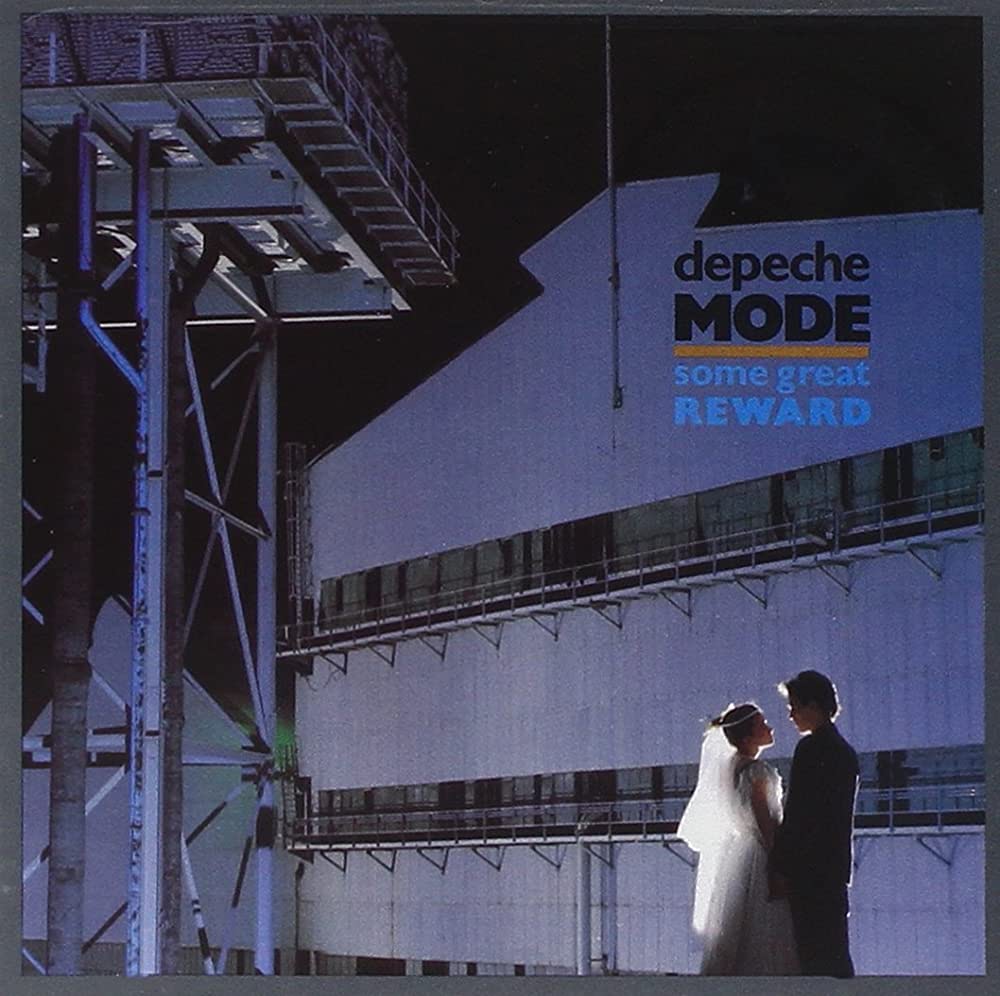
The industrial inclinations that first appeared on Construction Time Again get cranked up to a ten on Some Great Reward, and it wastes no time cutting to the chase with the implacable desperation of “Something to Do,” a track that placates its ennui with relentless momentum and an off-kilter instrumental bridge that would fit snugly into any of The Garden’s albums. It is immediately followed by the seductive “Lie to Me,” which heralds Depeche Mode’s future extolments of vice-fueled romance like “Policy of Truth” and “Enjoy the Silence” without paling in comparison to those more familiar hits. Some Great Reward also contains the band’s first attempt at a ballad, “Somebody.” In true form, the song strays from the traditional idealizing platitudes that typically constitute the piano ballad format; instead, it offers a stream of conscience yearning for a mutually supportive, philosophically engaging, and unfiltered relationship rather than a potentially more tranquil but shallow romantic connection. Political themes return with further mixed results: “Master and Servant” succeeds in its comparison of BDSM power dynamics to ostensibly sexless social roles, while the catchiness of “People Are People” only partially compensates for the cliches and redundancies of its lyrical content. It pales in comparison to the solemn melancholy of “Blasphemous Rumours,” which answers the world-weary consternation of prior tracks with a conjecture that God must have “a sick sense of humor” for creating the horrific ways in which people can suffer in spite of their religious devotion. It is indicative of Some Great Reward‘s refinement of the perspective Depeche Mode gained on Construction Time Again and the group’s continuing inward search for meaning, liberation, and spiritual peace.
★★★★
Black Celebration – Depeche Mode (1986)
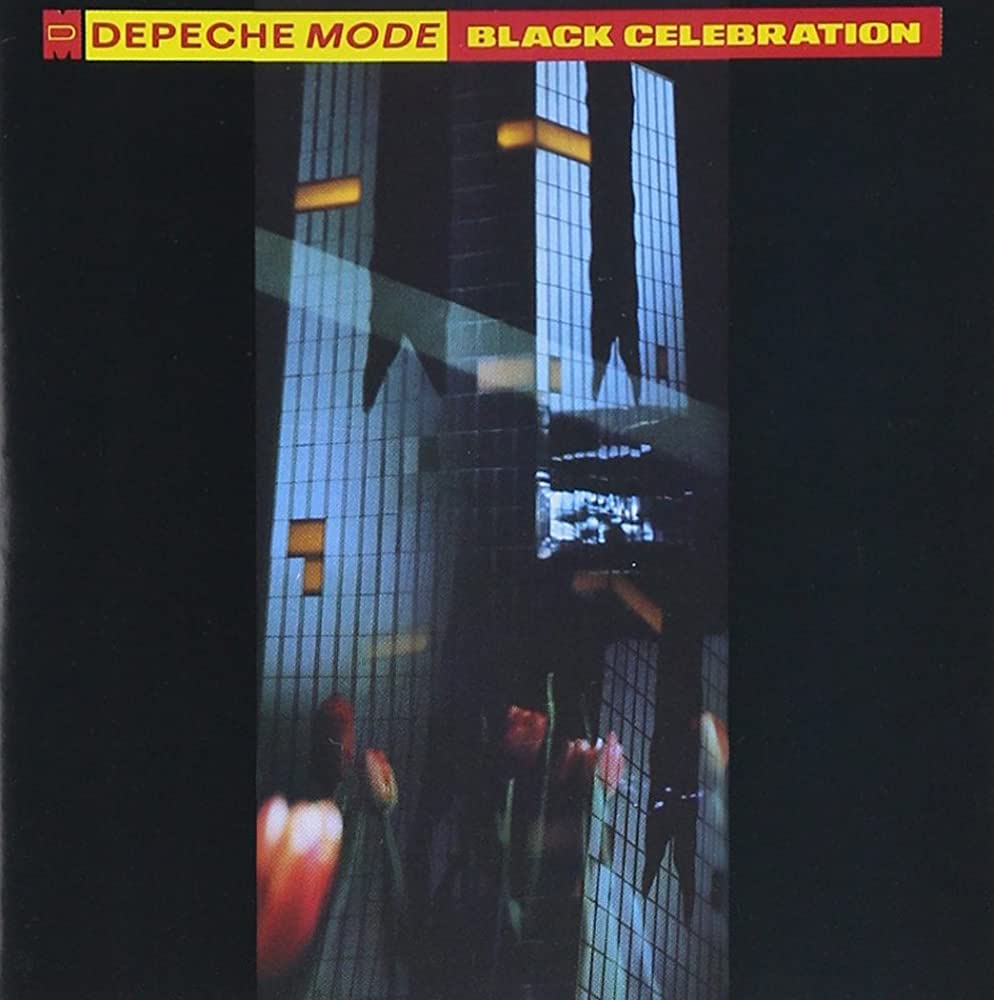
Black Celebration sees Depeche Mode taking one step forward into a darker, more sinister persona and two steps back in production and songwriting quality. While highlights like the dogged “A Question of Time” and wistful “World Full of Nothing” come out unscathed, many tracks on this prelude to the more widely praised Music for the Masses are hampered by clumsy lyrics or superfluous layers of cheap reverb effects. Right after the slogging title track, “Flies on the Windscreen – Final” doubles down on tossing subtext out the window with its opening pronouncement: “Death is everywhere.” “Sometimes” awkwardly reattempts the piano balladry of “Somebody” with sloppy echoes drowning out any traces of pathos it has to offer. The otherwise melodically pristine “Here is the House” is kept from its full potential by its reiterative refrain and half-baked histrionics – Martin Gore is guilty of leaning too heavily on identical rhymes in multiple instances prior to this song, but none of those examples ring as flatly as “Body and soul come together / As we come closer together.” While Black Celebration‘s contemporaneous critics attributed its shallowness to provocative naïveté, it is now easier to identify its dated ambience, disappointingly simplistic rhythm arrangements, and short-sighted ambitions as equal contributors to its relative infirmity compared to other releases in this evolutionary era of Depeche Mode’s discography.
★★★

Homework – Daft Punk (1997)
In many retrospective analyses of Daft Punk’s now-concluded career, their timeless sophomore album, Discovery, is often portrayed as having unintentionally established an insurmountable hurdle for its successor, 2005’s Human After All, to overcome. The group’s debut, 1997’s Homework, typically avoids similar criticisms due Thomas Bangalter’s often-quoted claim on the relationship between it and Discovery: “Homework […] was a way to say to the rock kids, like, ‘Electronic music is cool.’ Discovery was the opposite, of saying to the electronic kids, ‘Rock is cool, you know? You can like that.’”
In a world where Discovery is one of the most critically acclaimed electronic albums of all time and widely considered one of the greatest albums of all time – bookended by Willie Nelson’s Red Headed Stranger and Metallica’s self-titled record at #237 in Rolling Stone‘s 2020 edition of their 500 Greatest Albums of All Time List, no less – Bangalter’s statement feels more like an ad hoc proof of concept and an unfulfilled prophecy. For many, Discovery‘s infusion of sparkling dance music with pop songwriting acts as both forms of the enlightenment Bangalter described. Homework is less effective than Discovery at rebutting the fatuitous reputation of EDM because, as Daft Punk later admitted, it lacked a unifying purpose other than as a means of collecting previously-recorded singles into a presentable package (for what it is worth, Homework is entirely absent from the previously mentioned Rolling Stone list). Any assessments of Homework to that standard will inherently come up short outside of repeating the same praises of classic tracks like “Da Funk,” “Around the World,” and “Alive.”
The true strength of Homework in the context of Daft Punk’s discography is its extraordinary clarity. Beyond the perceivable G-funk influence in the deep groove of “Da Funk,” the album could also draw comparisons to Dr. Dre’s 1990s production discography in its immaculate appreciation for spacial detail. Take the sampling of Billy Joel’s “Just the Way You Are” on “High Fidelity” for example: it is indicative Daft Punk’s ingenious instinct for utilizing samples that contribute just as much atmospherically to the song as they do melodically. The duo didn’t select the track because they thought people would recognize the iconic Billy Joel song. They used it because it is such an impeccable recording of a Fender Rhodes piano that the ways in which it can be twisted and molded to their liking are endless. While Daft Punk still had room to grow in the scope of their vision, Homework remains an impressive display of the group’s core strength: pure sonic wizardry.
★★★½
Raven – Kelela (2023)
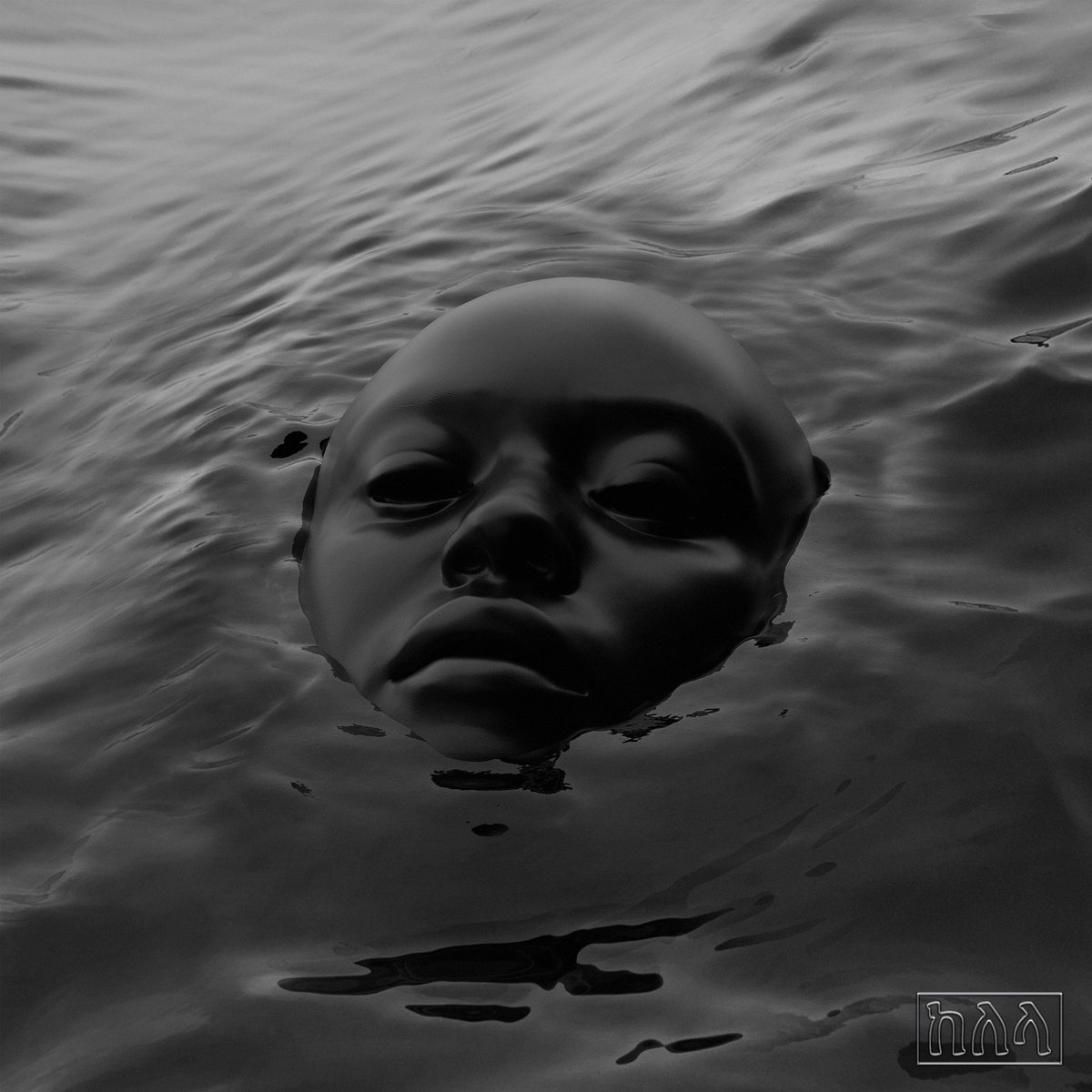
After years of anticipation, Kelela’s sophomore album offers a first glimpse at what she can accomplish with an explicitly-demonstrated vision. Although thirteen other producers had a hand in Raven‘s sound, the album’s component pieces never betray its cohesion as a singular product. Kelela herself leans into the Siren-esque role she dabbled with on Take Me Apart, curating a sonic landscape of synths and rhythms that ebb and flow like the murky waves on the cover art, oscillating between tranquil and torrential currents of sound. The title track highlights the themes of isolation and metamorphosis that tie Raven to its lyrical motif of Kelela being “far away.” Far away from who, what, or where? The ambiguity of this point of reference provides the space for Kelela’s growth through acceptance: there is strength and individuation to be found in the position of the castaway. If Kelela is marooned in uncharted waters, she makes those waters hers. The journey of Raven is an inverse of Homer’s Odyssey: rather than returning to a familiar home, the listener floats ever deeper into Kelela’s domain. She found her space out here. Perhaps you can, too, if you let the tides take you.
★★★★
 Delian Media
Leave a comment