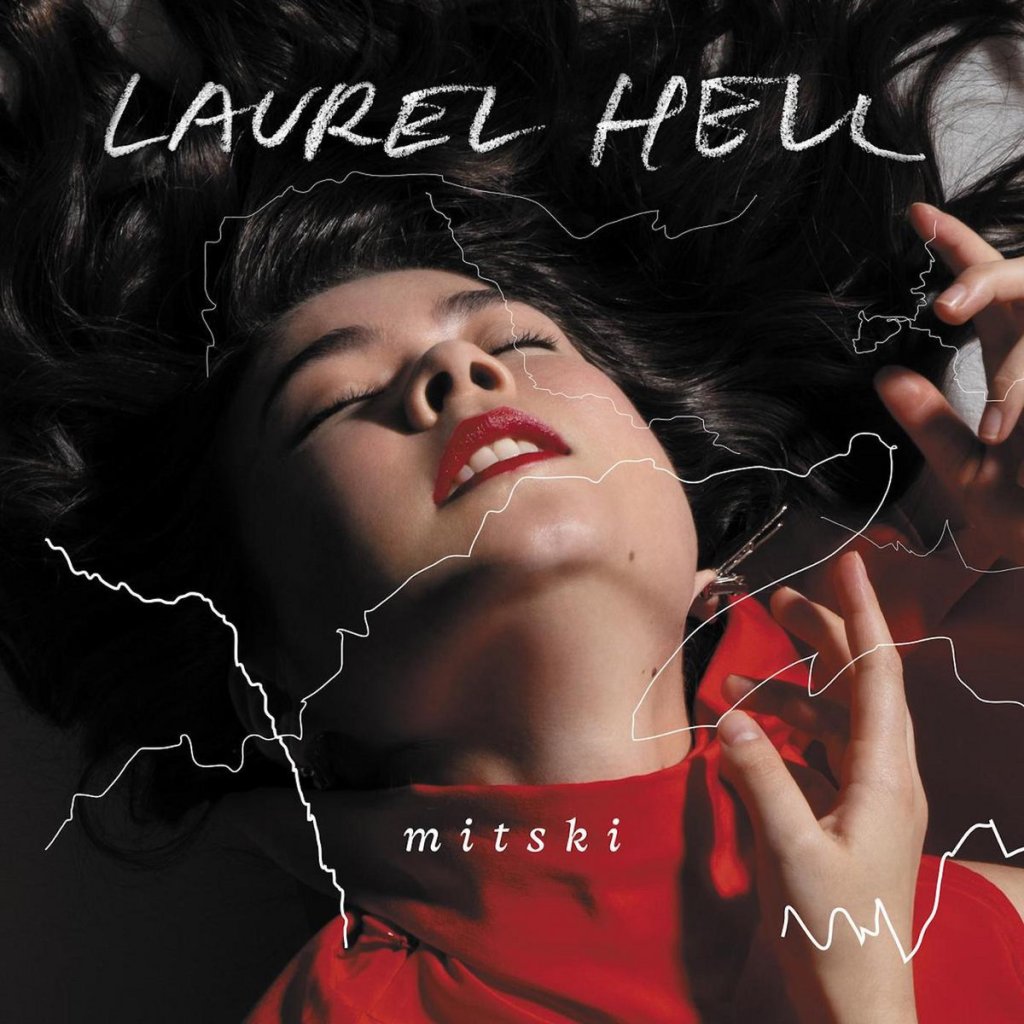
“Valentine, Texas,” the opening track of the tentative final album from Mitski, is postured as an invitation to the darkness, the scene behind the curtain that depicts a side of Mitski previously unseen. It is a tempting offer to hook her fans into the long-awaited follow-up to 2019’s Be the Cowboy, a triumphant collection of pining pop songs on the loneliness that follows an earth-shattering realization that the love you have been fantasizing over is just that: a fantasy. With lyrics evoking “the night,” “the dark,” and “the gates of Hell,” Laurel Hell uses elements of 1980s gothic rock and pop music to turn its attention outward and illustrate the cruel world that subjects its narrator to the heartbreak and emotional turmoil Mitski listeners are well-familiar with by now. Its opening mimics the cathedral-sized synthesizers of the Cure’s “Plainsong” so transparently that it is hard to not imagine dark eyeshadow and red lipstick painting itself onto the singer as soon as the drums kick in.
Unlike its inspirations – and its predecessor, for that matter – Laurel Hell frequently falters in its attempts to deliver on the pain it is so preoccupied with. In nearly every song, there is at least one element of the performance that sticks out in its unwillingness to emotionally commit to the message being portrayed. The most frequent perpetrator is Mitski’s vocal performance; her detached and uninterested voice abandons the familiar melodrama of a high schooler’s composition notebook in favor of the unenthusiastic angst of a teenager roped into a mandatory role in a school play. It only makes awkwardly upbeat tracks like “Should’ve Been Me” and the reluctant closer “That’s Our Lamp” feel more out of place when the apathetic singing puts into question why the track is there in the first place. The former song is clearly going for the campy tone of songs like “The Lovecats.” Love or hate Robert Smith’s howling voice, he has undeniably perfected the art of impassioned, wistful vocal delivery. Mitski’s vocals on “Should’ve Been Me,” on the other hand, seemingly refuse to empathize with the West Side Story-esque campiness of its instrumental accompaniment in affect or melody: the rhythm calls for jazzy, syncopated snapping, and Mitski responds with nothing. The music only ever seems in sync with itself when it spotlights the experience of burnout, namely on “Waiting For The Knife” and “Heat Lightning.” It is easy to imagine how a whole album of songs focused on how much Mitski does not want to make music anymore could wear thin, so there needed to be poppy and “fun” tracks like “The Only Heartbreaker” and “Stay Soft” to sugarcoat the acrid motivation underlying the most genuine emotions of Laurel Hell, but the result of this compromise is a collection of songs that are in constant conflict with one another. It is bittersweet in its successful argument that Mitski is right to call it a day on her music career when it provides no further fulfillment than that of a business obligation.
★★½
 Delian Media
Leave a comment